
'Industry in the City' URBAN DESIGN 179 Topic Introduction
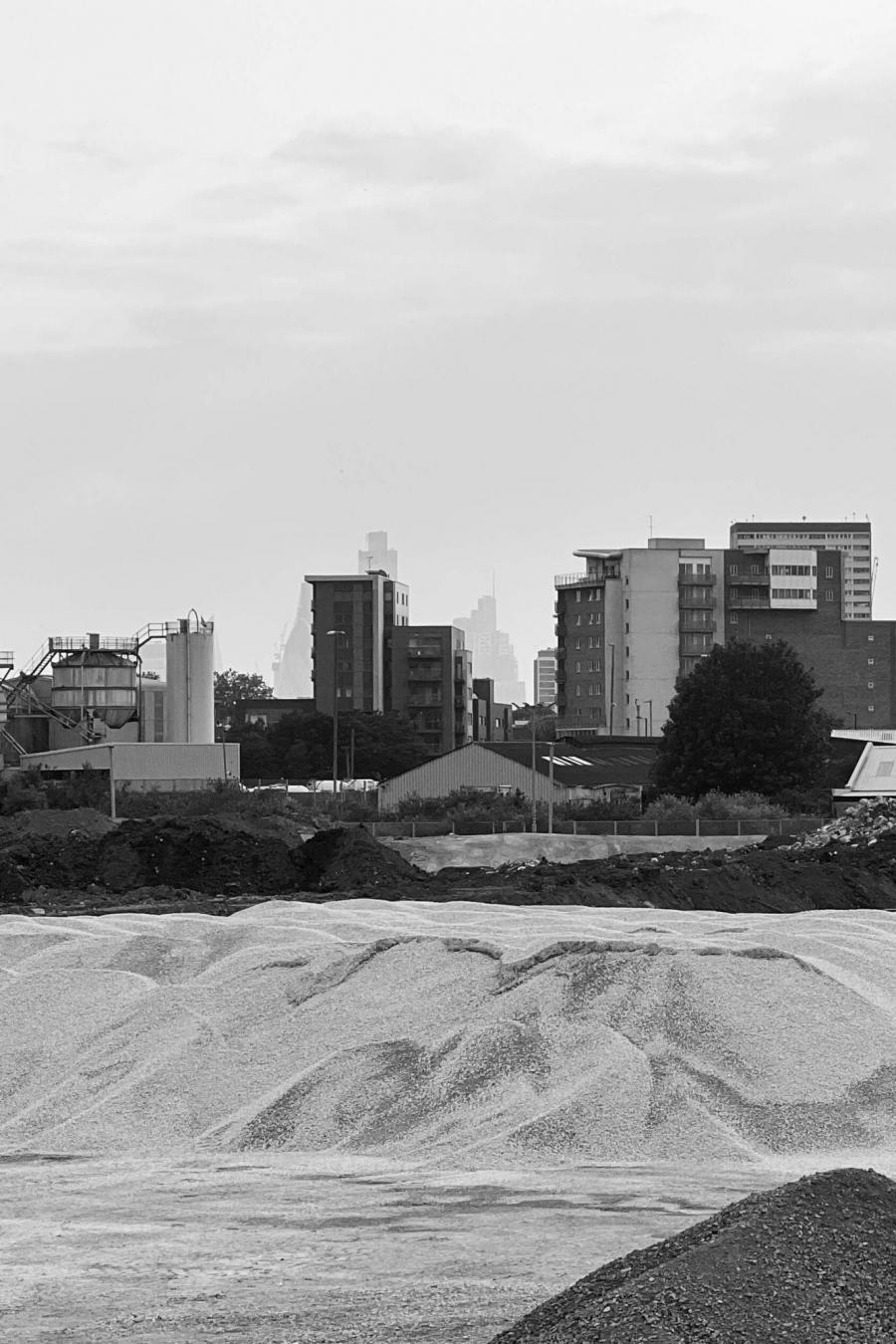
Industry has always made cities. Even in a post-industrial age, no city could function without it. Construction materials, household waste, next-day deliveries, sourdough bread: all rely on industrial spaces to produce, process, repair or dispatch. Yet we have long ago lost pride in the industrial life of cities and, as a society, have gone to great lengths to conceal it. More than that, we are displacing it at scale.
The statistics in the UK are stark. Inner London has lost around 40 per cent of its industrial floorspace in the past two decades; Manchester and the West Midlands roughly half that. This displacement pushes industry further from where it is needed, inflates carbon emissions, removes jobs from local communities, and profoundly reshapes the lives of those who depend on industrial work.
This is not to romanticise the past. Industry has not always been a good neighbour. Dickensian images persist in our imagination: tanneries pressed against homes, factories fouling the air and the inescapable noise of machinery. Yet there is something both thrilling and unsettling about walking through Smithfield Market in the heart of the London or knowing that Meta’s headquarters at King’s Cross unapologetically backs onto a concrete batching plant. Cities thrive on proximity, friction and coexistence.
This issue of Urban Design examines the role of industry in the city: at the scale of society, as a piece of urban fabric, and as a building type. A good number of the examples are from London, as this is where the policy and the market context have instigated more experimentation, however it is far from a London-centric issue. The articles capture what is taking place in other European cities, such as Paris and Rotterdam, where governance models sometimes allow for public sector interventions that the UK can only dream of.
The contributors address the range of scales and solutions required to allow industry to thrive, whether nestled in the heart of urban neighbourhoods, as part of larger urban industrial parks or as transformed logistics schemes outside the city.
Before diving in, here are a few questions to keep in mind.
What is urban industry?
Urban industry is many things. A construction-waste depot, an asphalt batching plant. A bakery, a sandwich factory, a dark kitchen, a wholesaler, a repair shop, a logistics warehouse, a film studio or an artisan workshop.
The list is endless, as are their sizes, requirements and impacts. Some of these uses can be difficult neighbours. Others could sit comfortably behind a high street or within a residential neighbourhood.
The problem is that the blanket term ‘industry’ flattens these distinctions. It makes planning, debate, development and day-to-day operations unnecessarily contentious. A day may come when our vocabulary is richer, able to distinguish more clearly between those uses that truly need separation and those we might welcome next to our homes.
Can it be any different?
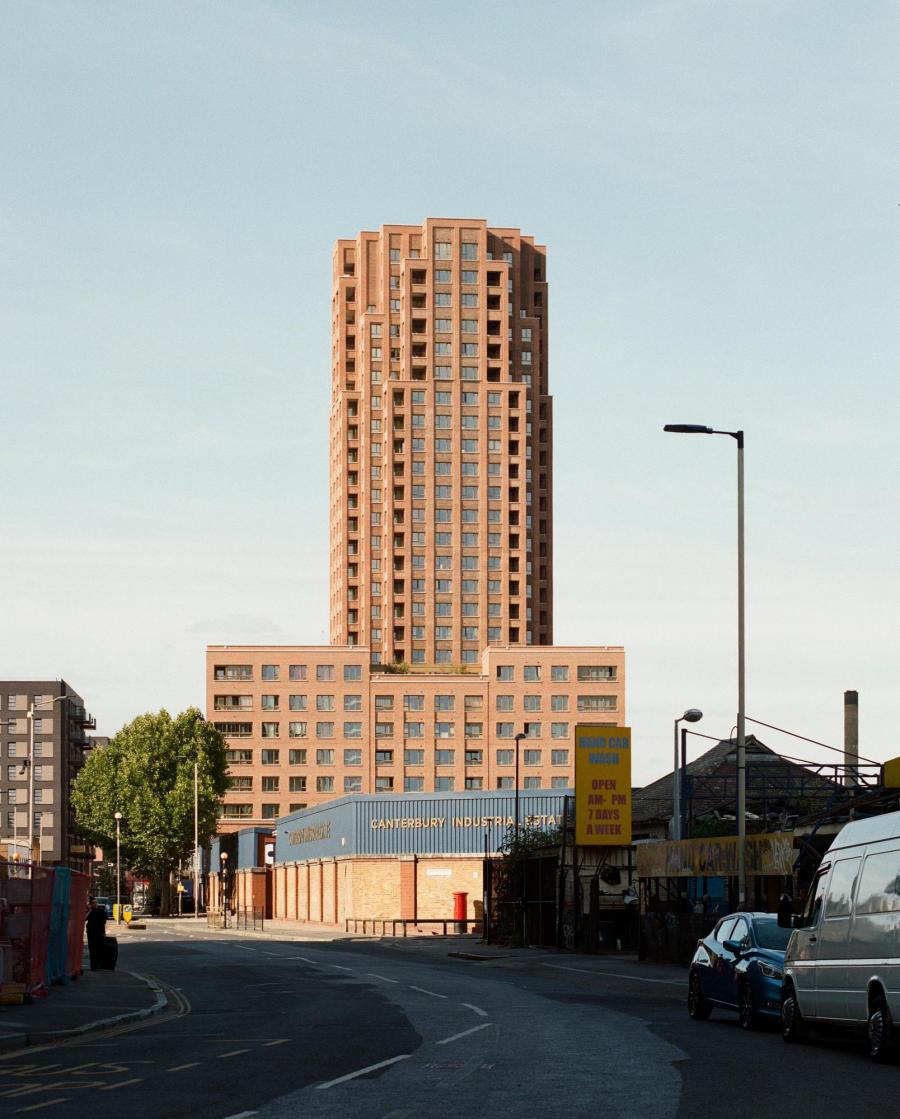
‘If you can’t see it, can’t hear it and can’t smell it, you may as well live next to it.’ This was the notion proposed for intensifying heavy industrial operations at Bow Goods Yard in Stratford. The concept sees essential rail freight operations, concrete batching and aggregate storage enclosed and screened as part of the masterplan. The result was near-unanimous support from local residents for an industrial scheme in the middle of the city.
Elsewhere in Camberwell, two terraces of small industrial units accessed from a shared yard, with generous street fronts and careful material choices, sit comfortably among Victorian family homes. Just over a mile away, a stacked industrial logistics hub at Mandela Way in Southwark evokes a Georgian mill more than a modern shed. In Hackney Wick and Fish Island, small workshops and industrious yards are integrated into mixed-use, residential-led blocks, hosting maker spaces, studios or a bakery.
Cities are full of examples of ingenious attempts to retain industry. The models are available. The pilot projects have been built. But most of them have been dismissed as unviable relics of an era of abundance.
How do we plan for boom times in bust times?
Planning has an awkward habit of being least onerous when development is most viable, and most burdensome when it is not. In London in particular, a decade was spent encouraging intensification: stacking industrial units, experimenting with colocation, and trying to import compact typologies familiar in Paris or Hong Kong but alien to the UK. Many of these pilots, conceived in an era of seemingly endless demand, now struggle to attract occupiers. Their costs appear exorbitant amid rising construction prices and tighter financing.
It would be easy to dismiss such projects as naïve or utopian, misreading occupier needs or local market realities. But that would be shortsighted. However fragile things seem today, the growth trajectories of London and Manchester remain upward. We need more housing, even if we currently cannot afford to build it. And we need more industrial space, which we currently cannot afford to intensify. All of this must happen on a finite amount of land.
Something will have to give. My guess is that stacking and co-locating are here to stay. Typologies will evolve, operating models will adapt, business rates may change. But the continued displacement of industry is not a credible option.
Urbanism therefore has a critical role to play. It must set ambitious frameworks that demand intensity and urbanity, and encourage mixing where appropriate. It should robustly protect industrial land, whether for waste recycling, MOT centres or artisanal furniture makers. All while knitting those areas together with their localities. Workers and visitors should have the right to walk, cycle or catch a bus to an industrial job, rather than be forced to drive to work. And so, an urban framework must treat an industrial area as a piece of a city, not a closed-off estate. That framework can then adapt to accommodate a more basic shed born out of bust times, and a subsequent stacked edifice in boom times. It will come. And we should be ready for it.
Błażej Czuba, Associate Director, Maccreanor Lavington
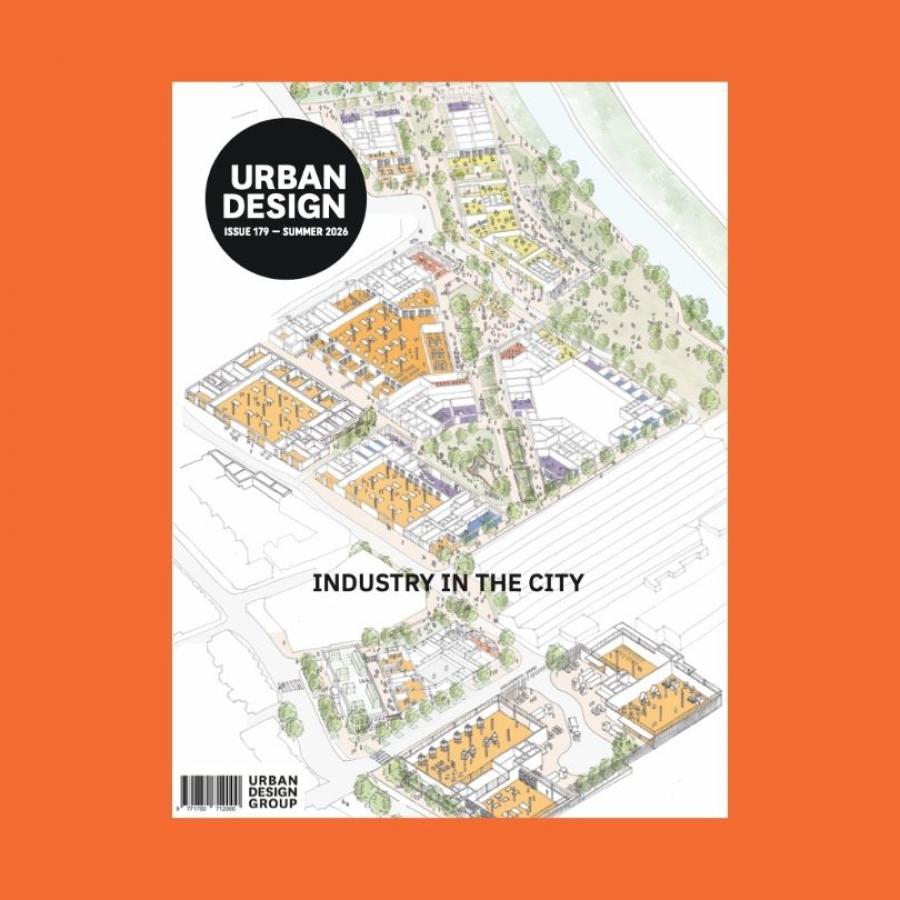
Interested in diving deeper? Become a member of the UDG to receive the URBAN DESIGN Journal on your doorstep every quarter, and join our leading community that's shaping better places for everyone. Join before 25 September 2026 to receive the 'Industry in the City' issue.
