
Grub Street
I used to teach architecture students with an urban designer called Mike Menzies, who also taught them environmental psychology. One thing I learnt from Mike was about Abraham Maslow’s hierarchy of human needs. This is often expressed as a pyramid of layers, with physiological needs being at the base, and self-actualisation being at the summit. One of the most basic physiological needs, if not the most basic, is to eat, and I think that is why I get impatient with food critics, who often elevate this fundamental activity into something precious and rarified. (‘…cakey drop scone topped with a sultry duck liver parfait, jammy damsons and tiny, frothy bouquets of elderflower’ - The Guardian).
I can’t claim that this is totally rational, because if we need to eat then we should eat as well as possible, and certainly our sensory needs (which are located somewhere in that pyramid sandwich) can be satisfied by delightful combinations of taste, colour and texture which we can find in intelligently prepared and cooked food. No, I think my impatience, and my switching off Radio 4 every time Jay Rayner comes on, is at least partly to do with my stubborn prejudice for the ordinary and the artisanal over high art. I liked Frank Gehry in the 1970s when he made buildings out of corrugated steel and chain-link fencing - less so in the 1990s when he could afford to use titanium.
I often use Yotam Ottolenghi’s recipes, but also I often expediently miss out items from his long lists of ingredients. His recipes are rooted in the artisanal, but I suspect that Turkish peasants too may not always have ready access to pomegranate molasses and four different kinds of tomato.
So I am very inclined to favour street food, a genre which at its best I take to be characterised by a combination of excellence and lack of pretension. In Digbeth we have had since 2012 the Digbeth Dining Club (DDC), an event which happens every Friday evening starting around 5.30pm. It is in a yard across the street from the Custard Factory, squeezed in between the railway viaduct and the new workspace building, also in blue brick, called Rhubarb. Opening off the yard is a big room in one of the via duct arches, where there is a licensed bar and rows of trestle tables and benches.
In the yard each Friday there are five or six food stalls, selected in changing combinations by the organisers from a heterogeneous list which includes The Original Patty Man, Canoodle, Manila Munchies, The Hungry Toad, Habaneros, Platinum Pancakes, Fat Duck Spuds, Spectacular Goat, and The Vegan Grindhouse. By 6.00pm it is seriously crowded and noisy in both spaces, a bit too noisy for me when the DJ on the edge of the street starts up as well. The quality of food is excellent, and in the past two years DDC has won the Best Food Event in the UK award at the British Street Food Awards.
I think that what is satisfying about the DDC is that there is a correspondence between the nature of the event and the nature of the quarter that accommodates it. Both have an authenticity (a dangerous word, I know, because it invites one to suspect one is being sold the opposite), both are rather rough-edged and make a virtue out of unexpected juxtapositions and a degree of opportunism and transience. The day after my last visit I was at Moseley Farmers’ Market, buying Warwickshire and Worcestershire potatoes, broad beans, rhubarb and cheese, and there is also a similar fit between event and place there. If you were to try to transfer one event to the other place, it wouldn’t entirely work. Mike also coined the formula place = space + use, which I stole a long time ago, and which is blu-tacked to my studio wall. The DDC has turned a left-over space into a place, and it is one of the strange mosaic of places that makes this quarter.

As featured in URBAN DESIGN 136 Autumn 2015
Want to read more like this? If you're not already an Urban Design Group member, why don't you consider joining?
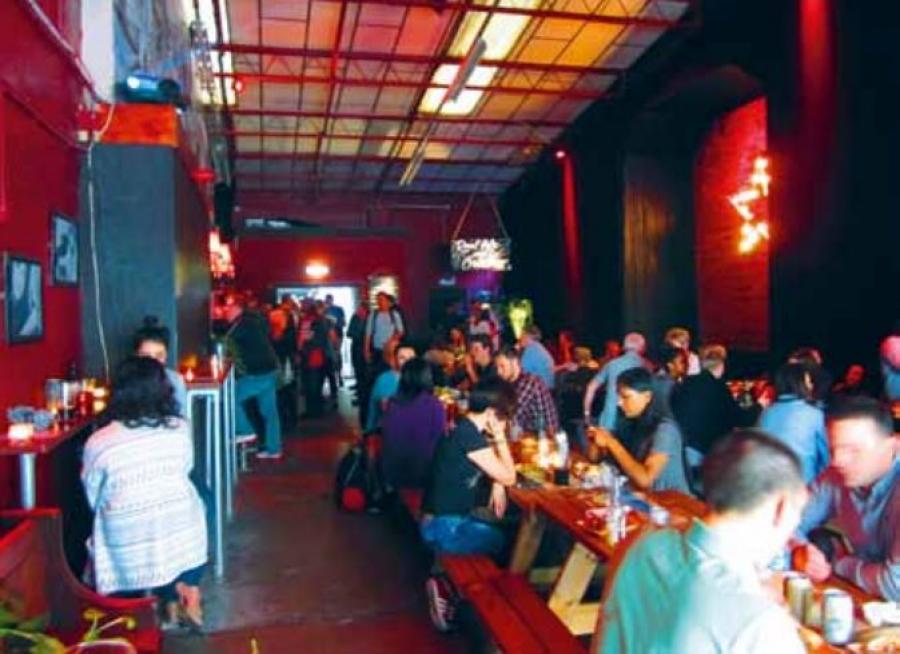
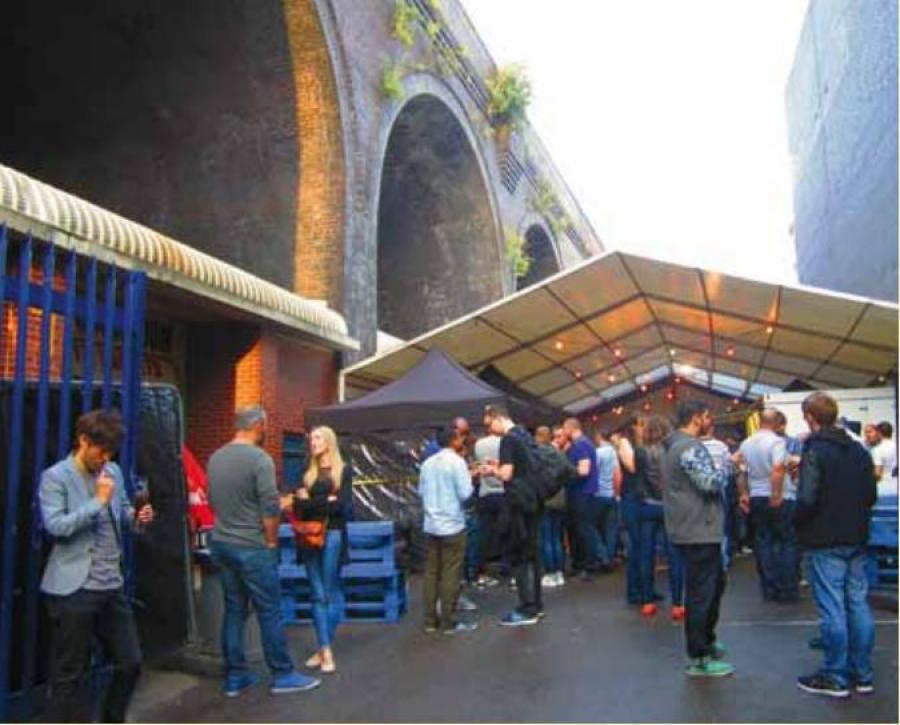 The Digbeth Dining Club, Birmingham
Joe Holyoak is an architect and urban designer, working in masterplanning, site planning, area regeneration, historic conservation, and community participation.
He is also on the Editorial Board of the URBAN DESIGN journal.
